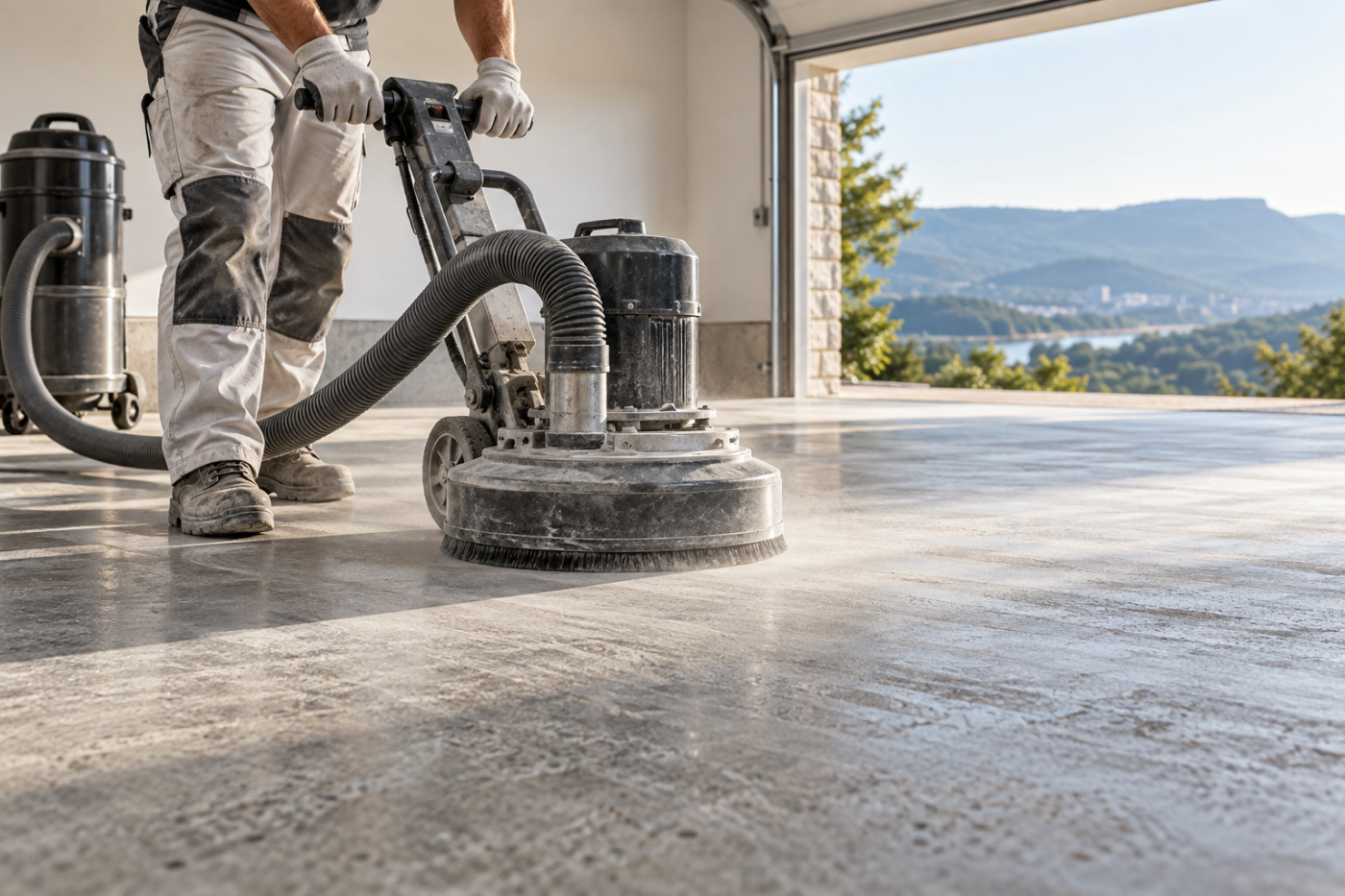
Technician mechanically preparing a garage concrete floor with a diamond grinder
Chattanooga coating guidance

Polyaspartic Floor Coatings

A fast-curing, UV-stable coating option often used for garage floors, patios, and high-traffic concrete.

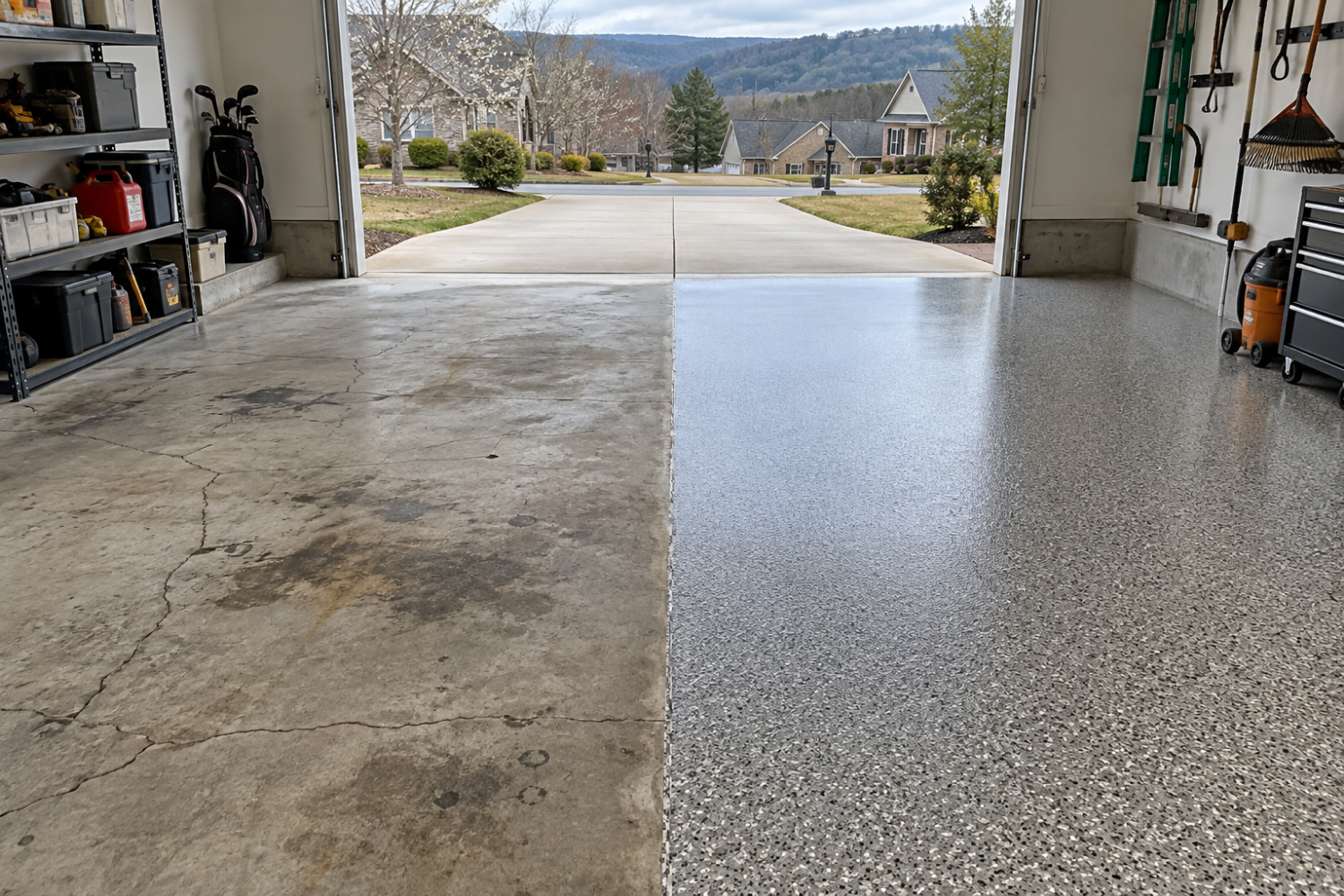
Illustrative finished full-flake garage floor surface
Illustrative finish reference—not a claim of a completed local installation. Ask any provider for verifiable, project-specific samples.
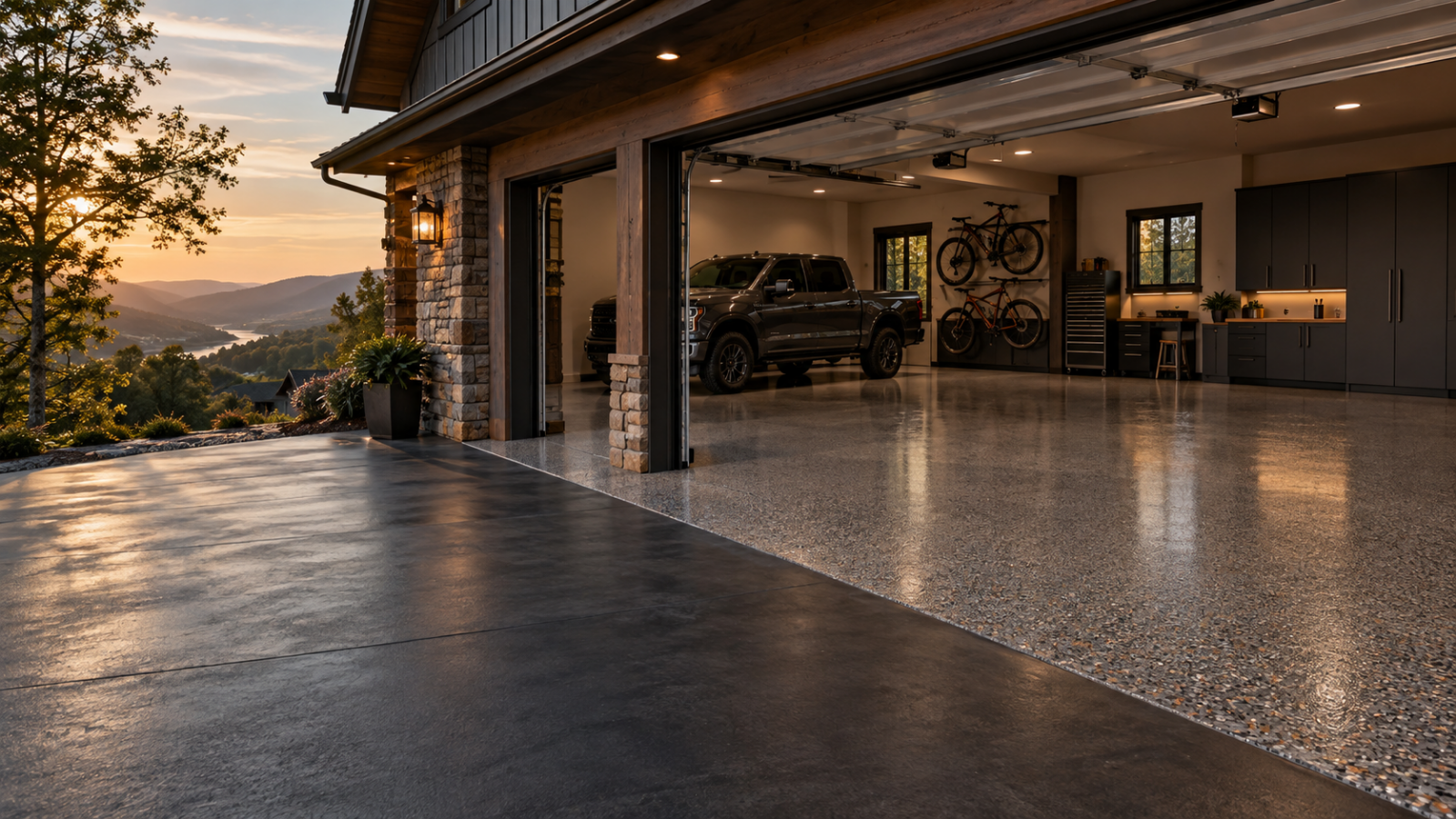
Illustrative clean garage with a decorative concrete floor coating
Appearance varies with concrete condition, lighting, selected system, and the preparation scope.

Polyaspartic coatings are fast-curing resin systems commonly used as a base, topcoat, or full system over prepared concrete. They are popular when cure time and UV stability matter, but the right installation still depends on slab moisture and the complete system—not a label alone.

What a careful evaluation should cover

Ask whether the scope lists every layer, how repairs are treated, and the realistic drive-on window for current weather conditions.

Questions to put in writing

Ask who is doing the preparation, whether diamond grinding is included, what repair work is assumed, how change conditions are handled, and what the final system layers are. A clear scope is more useful than a broad “lifetime” claim with no detail behind it.

Related Chattanooga resources

Read our polyaspartic vs. epoxy comparison, garage floor coating cost guide, and garage preparation checklist before requesting a quote.
Related services

Continue with the question behind the project.

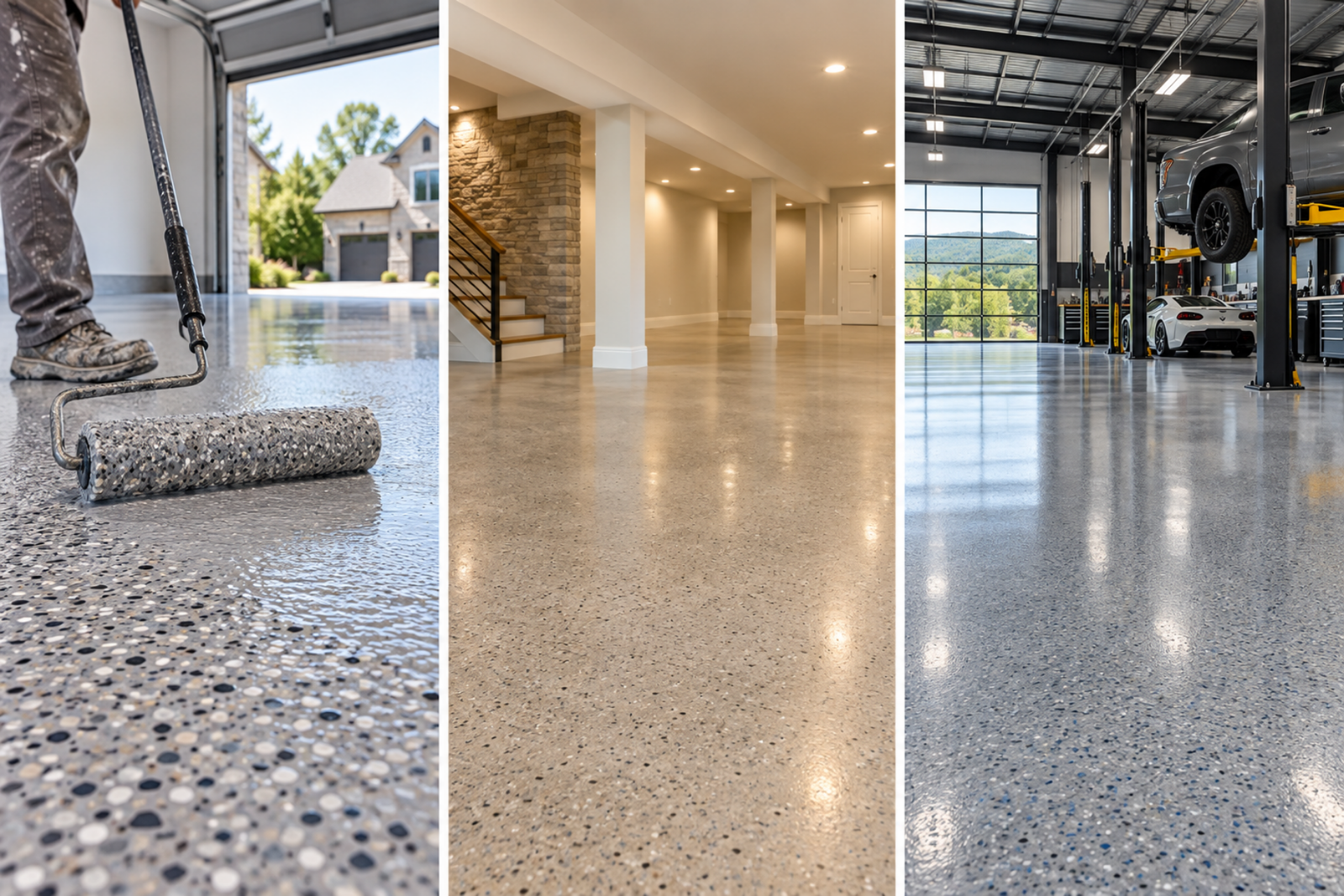
Illustrative garage floor coatings concrete coating environment

Garage Floor Coatings

A full-flake garage floor can make cleanup easier, protect exposed concrete, and change the feel of the whole space.

Explore garage floor coatings
Illustrative epoxy flooring concrete coating environment

Epoxy Flooring

High-build epoxy systems remain a serious option for garages, basements, workshops, and other protected concrete.

Explore epoxy flooring
Questions, answered

Useful answers before you choose a system.

Is polyaspartic better than epoxy?

Neither wins in every situation. Polyaspartic can offer faster curing and UV stability; epoxy is often valued for build and bond characteristics. The slab, product system, and preparation matter more than a one-word verdict.

Can polyaspartic go over old epoxy?

Only after the existing coating is evaluated and prepared correctly. A failed or poorly bonded layer can cause the new surface to fail with it.

Does a polyaspartic floor get slippery?

Texture, flake broadcast, topcoat choice, and added traction all influence slip resistance. Discuss the way the space is used before choosing a finish.

Start with the slab

Get a clear next step for your garage.

Tell us the space, its condition, and your city. We’ll route the request to an available local provider—without pretending every floor needs the same system.

Request a quote